











The Fascinating History of Cars: A Journey Through Time
The first automobile can be traced back to the steam powered devices of the 18th Century, making it hard to discredit the transitive and evolutionary history that cars possessed overtime. The electric cars we boast to call ours now, speak volumes about the change that automobiles have undergone throughout the decades and this blog seeks to provide its audience with the history of the automotive industry.
Beginning With Steam And Electrically Powere Vehicles
When talking about cars, the thought of a self-powered vehicle makes the most sense and that can be dated back to the late 1600s. The debut of steam powered vehicles is attributed to Nicolas-Joseph Cugnot in 1769 who was an engineer from France , and aimed to use the vehicle for transporting artillery. It is safe to say that for transport, these vehicles were entirely impractical as they were heavy and slow.
However, the 19th century brought remarkable changes to the automobile industry as battle against steam powered vehicles began , electric vehicles were now being invented and in the 1830s, a crude electric carriage was developed by Robert Anderson who was an inventor hailing from Scotland, although previously electric vehicles were created, proper range and speed were issues faced by most car manufacturers.
The Internal Combustion Engine and the Story of Its Development
The end of the 19th century marked an important turning point not only in the history of motor vehicle development, but also the entire world history as a whole, and this was made possible due by the rise of the internal combustion engine. A German engineer, Karl Benz is said to have built the earliest gasoline automobile in 1885. The Motorwagen, a three-wheeled automobile and patented by Benz in 1886, is considered as the first working unit.
Thereabouts in history, Gottlieb Daimler together with Wilhelm Maybach constructed the first four – wheeled vehicle. Their vehicle furnished with high speed internal combustion engine further transformed such vehicles to modern cars which they are today.
The Formation of the Automotive Industry: Ford’s Impact and the Model T
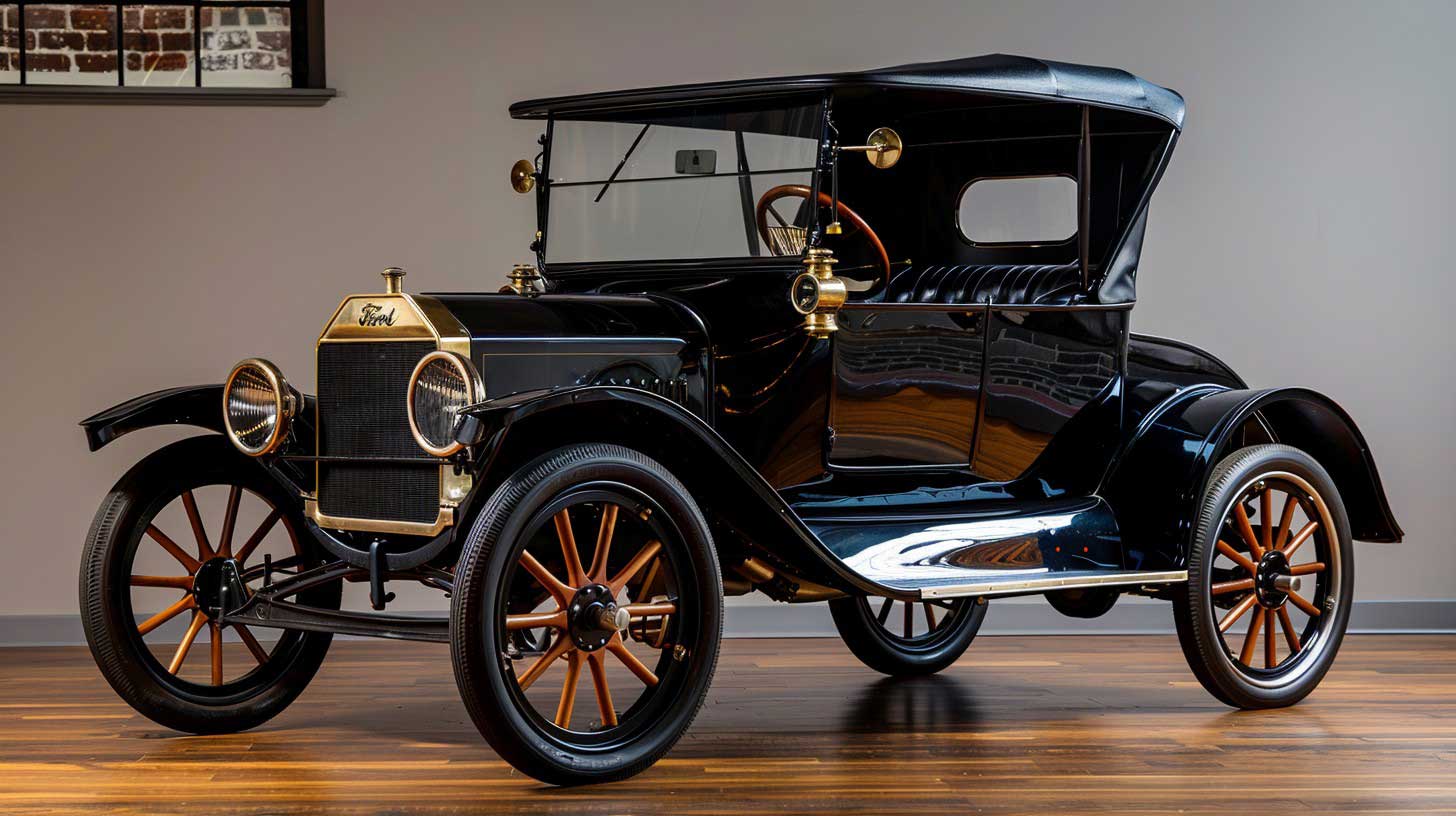
The first half of the twentieth century marked the real beginning of the automobile industry, and this could not have been possible without Henry Ford. Benz’s intentions of mass manufacturing through efficient manufacturing have always been present, but this dream was realized after Ford produced the Model T in 1908. However it wasn’t only the vehicle that revolutionized the industry, it was also Fords groundbreaking engineering.
Ford started using assembly lines, which made vehicle manufacturing cost effective. By 1913, with the advent of assembly lines, the amount of time used to produce Ford’s Model T dropped from twelve hours to ninety three minutes. Such efficiency made it such that Ford compelled to reduce the price of the model T, which made owning a car affordable.
The Golden Age of Automobiles: 1920s to 1950s
Often regarded as the Golden period for the automobiles, the years between 1920 and 1950 were characterized by the rapid development of the industry as a whole as well as the ease of use of cars. Some of the features introduced at that time were hydraulic brakes, electric starters and even automatic transmissions. It was during this era that several American brands such as Dodge, Chevrolet,Buick and Cadillac were established. And with jeeps symbolizing freedom and high status, car business boomed alongside the northern hemisphere reconstruction plans after World War II . The golden period spurred the designs of iconic cars such as the Chevrolet Bel Air and nearly the all Ford products .
The Oil Crisis and Environmental Awareness: 1970s
The 1970s were the dawn of new challenges for the automobile industry. The fuel prices soared during the 1973 oil crisis and since then there has been great demand in the market for low consumption automobiles. Japanese autos such as Honda and Toyota aimed low as they began producing smaller, cheaper cars which had operations in easy rural areas. In recent years from the use of a fuel-efficient vehicle consumers began paying a heavier emphasis on the environmental aspects. The US Clean Air Act of 1970 in the US made automakers develop cleaner engines and catalytic converters which widened the definition of a vehicle.
The Digital Revolution: 1980s to 2000s
In the 1980s and 1990s, the automobile industry began to witness the introduction of cutting-edge digital technologies. In car mechanics, fuel injection, onboard computers, anti-lock braking systems became commonplace and normal features that enhanced performance and safety. This period also marked the onset of the luxury car frenzy that saw a surge and expansion for car makers, such as BMW, Mercedes Benz, and Lexus that sought to release high-tech classy vehicles.
The 2000s saw the first definition of the hybrid automobiles with a Toyota leading the way with the concept that revolved around hybrid vehicles, integrated cars combining electric motors and petrol engines that work well together increasing the efficiency of the automobile and at the same time decreasing the carbon emissions released by the automobile.
The Future of Cars: Electric or hybrid vehicles and self-driving cars that may soon be manufactured on an industrial scale
This trend has resulted in a change to the focus of the automotive industry whose trend seems to pivot towards electric cars driven by enhanced battery technology and the concern for the environment. A focus which seems to resonate with the message being championed by companies such as Tesla, Nissan and Chevrolet whose car production is geared towards environmental preserve. The combination of such policies would result in a strong push for electric vehicles within the industry.
So does the future hold electric cars or self driving cars? Or completely new vehicles never before seen. Electric vehicles which always drew the interest of investors such as Google and Ford are advancing, self driving cars which still could be categorized under special use or fully autonomous vehicles are still undergoing phases of testing but once put into commercial use have the potential to not only change but revolutionize the entire transportation and travel industry as we know it.
Final remarks
Cars have come a long way and their history is filled with memories and transformations. They have been transformed from steam powered carriages to electric and self driven ones meeting the necessities throughout demand and change. Looking ahead, it is important to note that cars will continue to be a major influence in how our world is developed.
Explore: Stylish Modern Elegance for Men: Elevate Your Look with Timeless Sophistication